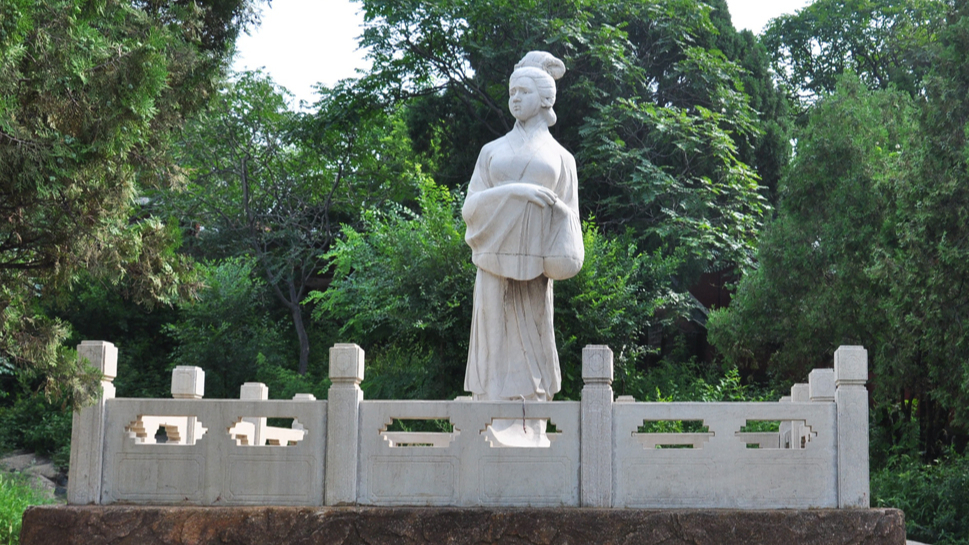
Lady Meng Jiang
Introduction
The tale of Lady Meng Jiang is one of China's Four Great Folktales, alongside the Legend of the White Snake, Liang Shanbo and Zhu Yingtai (The Butterfly Lovers), and the Cowherd and the Weaver Girl (Niulang Zhinyu). Known for its poignant narrative and emotional depth, the story of Lady Meng Jiang is an enduring piece of Chinese folklore that has resonated with audiences for centuries. It tells the tale of a devoted wife whose tears bore down part of the Great Wall of China, revealing the body of her husband, Fan Xiliang, who was forced to work on the wall's construction. This story is deeply embedded in the cultural consciousness of China and has been retold in various forms, including literature, opera, and modern media.
Historical Origins
The origins of the Lady Meng Jiang tale can be traced back to the Qin Dynasty (221-206 BC) and its construction of the Great Wall. The story is believed to have evolved over time, with different regions adding their own variations and embellishments. The tale's central theme revolves around the oppressive rule of the Emperor Qin Shi Huang, who conscripted countless laborers to build the Great Wall, resulting in widespread suffering and loss. Lady Meng Jiang's story symbolizes the human cost of such grand endeavors and the enduring power of love and grief. Her tale is said to have been passed down orally through generations before being recorded in written form during the Song Dynasty (960-1279). It reflects the historical and cultural context of its time, highlighting the struggles of ordinary people under imperial rule.
Story Variations
Over the years, the story of Lady Meng Jiang has been adapted into numerous versions, each with its own unique elements. One of the most common variations involves Lady Meng Jiang's search for her husband, which takes her on a long and arduous journey to the Great Wall. Upon arrival, she discovers that her husband has already perished, and in her grief, she weeps so profoundly that part of the wall collapses, exposing his body. Other versions emphasize her cunning and resourcefulness in evading the emperor's attempts to thwart her quest. Despite these differences, the core narrative remains consistent: a tale of unwavering love, devotion, and the triumph of the human spirit over tyranny.
Cultural Impact
Lady Meng Jiang's story is often cited as a symbol of fidelity and the enduring power of love. The tale has been incorporated into various forms of Chinese art and literature, including traditional opera, poetry, and contemporary fiction. It has also inspired numerous adaptations, from stage performances to film and television, demonstrating its timeless appeal. As part of the Four Great Folktales, Lady Meng Jiang's story continues to be celebrated and retold, ensuring its place in the cultural heritage of China.
Modern Interpretations
In recent years, the legend of Lady Meng Jiang has been reinterpreted in various modern contexts, reflecting contemporary themes and values. Authors like John Shors have drawn inspiration from the tale, expanding it with fictional characters and subplots to create new narratives that resonate with today's audiences. In his novel "Unbound," Shors reimagines the tale with a focus on women's empowerment, showcasing Meng as a symbol of strength and resilience. Such interpretations highlight the universal themes of love and perseverance that transcend time and culture. Modern adaptations often aim to balance the preservation of the story's essence with the incorporation of new elements that speak to current societal issues.








